

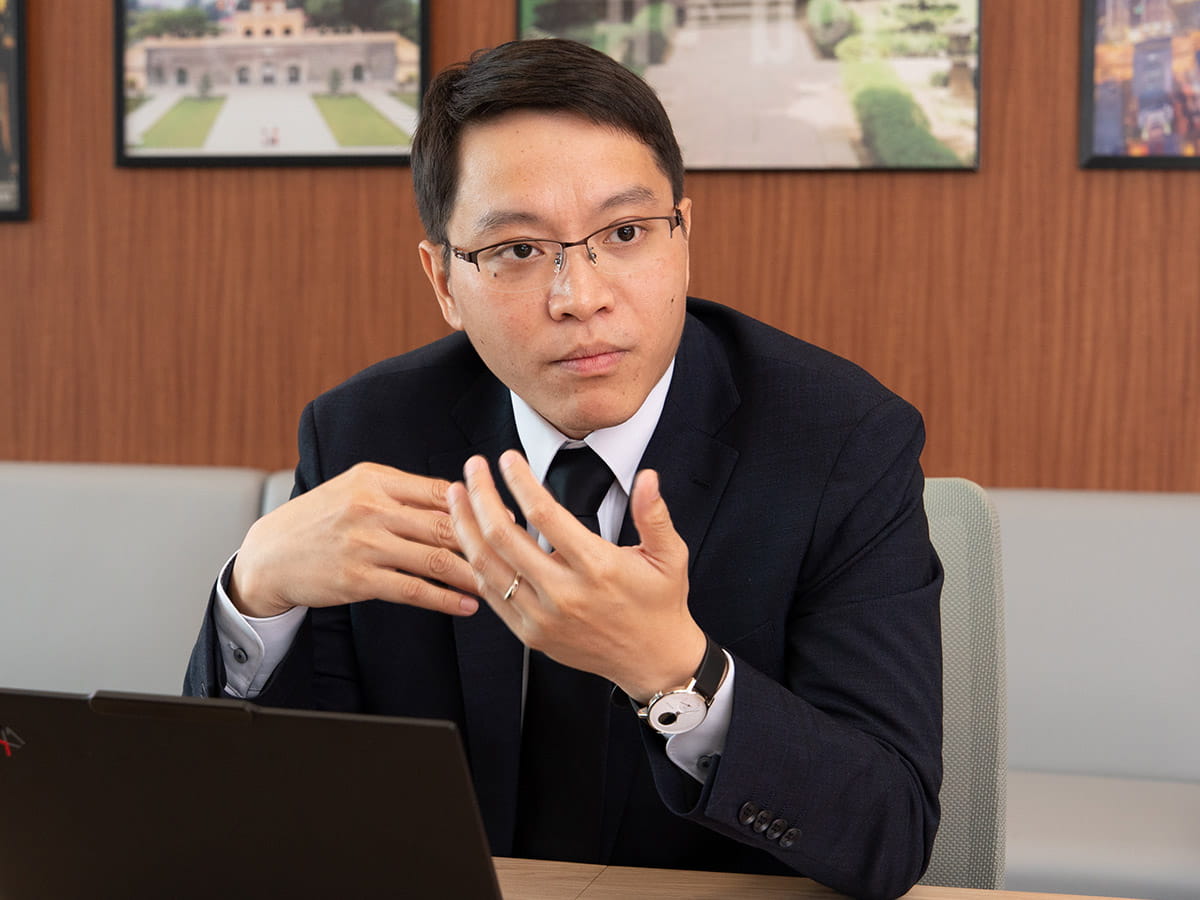
In an interview with Nikkei BP, Pham Quang Khang, Vice President & CACO (Chief AI & Consulting Officer) of Rikkei Japan, shares Rikkeisoft’s perspective on AI Modernization—and why transforming legacy systems should be about more than simply migrating code.
For decades, legacy systems have served as the backbone of critical business operations. Built and continuously modified over many years, these systems often contain not only complex technology but also valuable business knowledge accumulated throughout an organization’s history.
Yet as businesses accelerate their adoption of AI and emerging technologies, these systems are increasingly becoming a barrier to transformation.
The challenge is not simply that legacy technologies are old. Many organizations are also facing a shortage of engineers with legacy-system expertise, increasingly complex codebases, incomplete documentation, and high costs associated with maintaining or changing systems whose underlying logic is difficult to understand.
At the same time, businesses need systems that can adapt more quickly to new technologies and changing business requirements.
So, what should modernization really achieve?
In an interview with Nikkei BP, Pham Quang Khang, Deputy CEO & CACO (Chief AI & Consulting Officer) of Rikkei Japan, shared his perspective on the changing role of modernization and the approach Rikkeisoft is taking through AI Modernization.
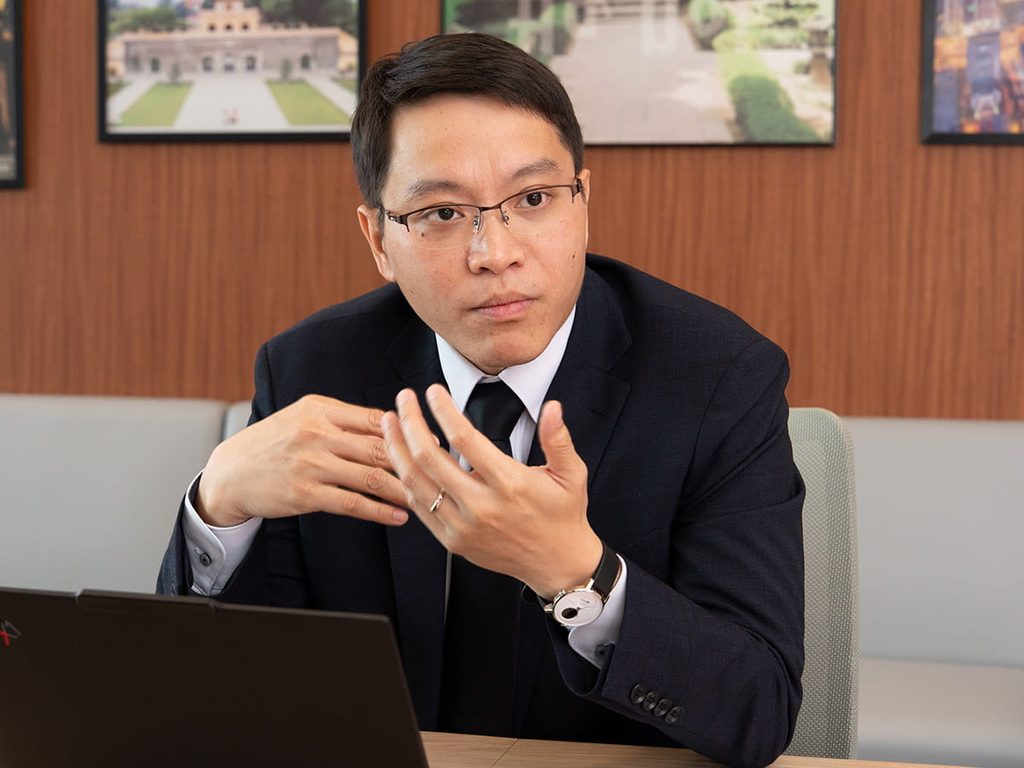
(Mr. Pham Quang Khang – Deputy CEO & CACO of Rikkei Japan)
Beyond Migration: Rethinking What Modernization Means
Traditional system migration often starts with a straightforward objective: move an existing system from an outdated technology to a modern one.
For example, a legacy application built with COBOL may be converted into Java. While this can address some of the limitations of legacy technologies, simply translating code does not necessarily result in a better system.
As Khang explains, legacy systems are more than source code.
Over years of operation, business rules, system dependencies, workarounds, and operational knowledge become embedded within the system. Documentation may also be incomplete or outdated, making it difficult to understand how the system actually supports the business.
This creates a fundamental challenge for modernization.
“The goal is not simply to move a legacy system to a new technology. It is to understand what the system does, rethink how it should work, and rebuild it as a foundation for future transformation.”
This is the thinking behind Rikkeisoft’s AI Modernization approach.
Rather than treating modernization as a one-to-one code conversion, Rikkeisoft first works to understand the existing system and the business processes behind it. AI can support reverse engineering and the reconstruction of system knowledge, while consultants work with customers to clarify business processes, fill gaps in existing documentation, and identify opportunities to improve the way the system operates.
In some cases, this process can reveal opportunities for Business Process Re-engineering (BPR). Instead of simply reproducing an inefficient legacy process in a modern technology stack, businesses can reconsider whether there is a better way to achieve the same business outcome.
The result is a fundamentally different objective.
The goal is not to recreate the old system in a new language. It is to build a modern, maintainable system that preserves essential business value while making it easier to adopt AI and other emerging technologies.
For Rikkeisoft, this distinction is critical: Modernization is not the destination. It is the foundation for what comes next.
AI + Human Expertise: A Smarter Way to Modernize
AI is changing how legacy modernization can be delivered. It can analyze large amounts of code, accelerate documentation, identify system relationships, support design activities, and generate code in modern programming languages.
But according to Khang, AI alone cannot fully understand the context of a complex enterprise system.
A business process may involve multiple applications, manual operations, external systems, and decisions made by employees—elements that may not be explicitly represented in source code.
This is why Rikkeisoft combines AI-driven automation with human consulting expertise throughout the modernization process.
AI accelerates the technical work
AI can support activities such as:
- Reverse-engineering legacy source code
- Analyzing system logic and dependencies
- Reconstructing technical documentation
- Identifying business and system workflows
- Generating target-system designs
- Producing code based on modern architectures and requirements
Consultants provide context and validation
Human experts remain responsible for understanding the business context and validating AI-generated outputs.
They work with customers to:
- Understand existing business processes
- Identify gaps in system documentation
- Validate the results of AI-driven analysis
- Determine where business processes can be improved
- Review target architecture and system design
- Ensure the resulting system meets business and technical requirements
This human-in-the-loop approach is particularly important for mission-critical enterprise systems, where accuracy, traceability, and accountability cannot be compromised.
Rikkeisoft also applies a structured approach to how AI is used. Rather than asking one AI system to process an entire complex legacy environment at once, the work can be broken down into smaller, context-specific tasks. Relevant information is carefully selected and provided to AI so that each task can be analyzed with the appropriate context.
This helps reduce the risk of inaccurate or irrelevant outputs while making AI more effective at each stage of modernization.
Rikkeisoft’s TraceLink further supports this process by helping establish relationships between elements of the legacy system and their corresponding components in the modernized system. This makes it easier for experts to trace and validate how the system has been transformed.
The principle is simple:
AI accelerates the work. Human expertise ensures that the work is done in the right context.
This combination allows Rikkeisoft to take advantage of AI’s speed and scalability without losing the business understanding and accountability required for complex enterprise transformation.
Why Rikkeisoft: From Modernization Expertise to AI-Ready Transformation
AI may be changing how modernization is delivered, but Rikkeisoft’s expertise in migration and modernization was built long before the rise of generative AI.
Through years of working with legacy environments, Rikkeisoft has developed practical knowledge of the challenges involved—from understanding complex codebases and reconstructing missing documentation to managing system dependencies and validating modernized applications.
Today, Rikkeisoft combines this experience with AI and consulting capabilities to take a more comprehensive approach to modernization.
Proven Modernization Expertise
Modernization is not simply a technical exercise. It requires a deep understanding of how legacy systems have evolved, how business logic is embedded within them, and where transformation can create real business value.
Rikkeisoft brings this experience into every modernization project, using AI to accelerate analysis and execution while applying human expertise to ensure the transformation is accurate and aligned with business needs.
AI + Consulting + Japan Market Expertise
Rikkeisoft combines AI technology, modernization expertise, and business consulting to help customers look beyond the question of how to migrate and consider what the system should become.
Through Rikkei Japan, Rikkeisoft also brings dedicated expertise in the Japanese market, enabling teams to work closely with customers to understand their business environments, requirements, and legacy-system challenges.
For organizations evaluating a large-scale transformation, Rikkeisoft can also begin with a focused modernization pilot. This allows customers to validate the approach, assess the quality of the output, and understand its potential impact before scaling the initiative.
Building a Foundation for Continuous Transformation
Rikkeisoft’s approach does not stop when the modernized system goes live.
The knowledge reconstructed during modernization—including business logic, system architecture, dependencies, and documentation—can be organized into a structured knowledge base.
Combined with AI agents, this knowledge can support ongoing development and maintenance, helping teams analyze the impact of changes, identify implementation approaches, and accelerate system enhancements.
In this way, modernization becomes more than a one-time migration project. It creates a foundation for continuous transformation:
Understand → Modernize → Build Knowledge → Apply AI → Continuously Evolve
This is the broader value Rikkeisoft brings to AI Modernization: not simply replacing legacy technology, but helping businesses build systems that are ready to evolve with AI and emerging technologies.
Building What Comes Next
Legacy systems contain decades of business knowledge. Modernizing them should therefore be about more than replacing an old programming language with a new one.
As Pham Quang Khang explains, the real opportunity is to understand what lies within these systems, rethink how they support the business, and transform them into a foundation for future innovation.
By combining modernization expertise, AI capabilities, and consulting experience, Rikkeisoft helps businesses move beyond migration—and build the foundation for continuous, AI-driven transformation.
Modernize today. Build for what comes next.